
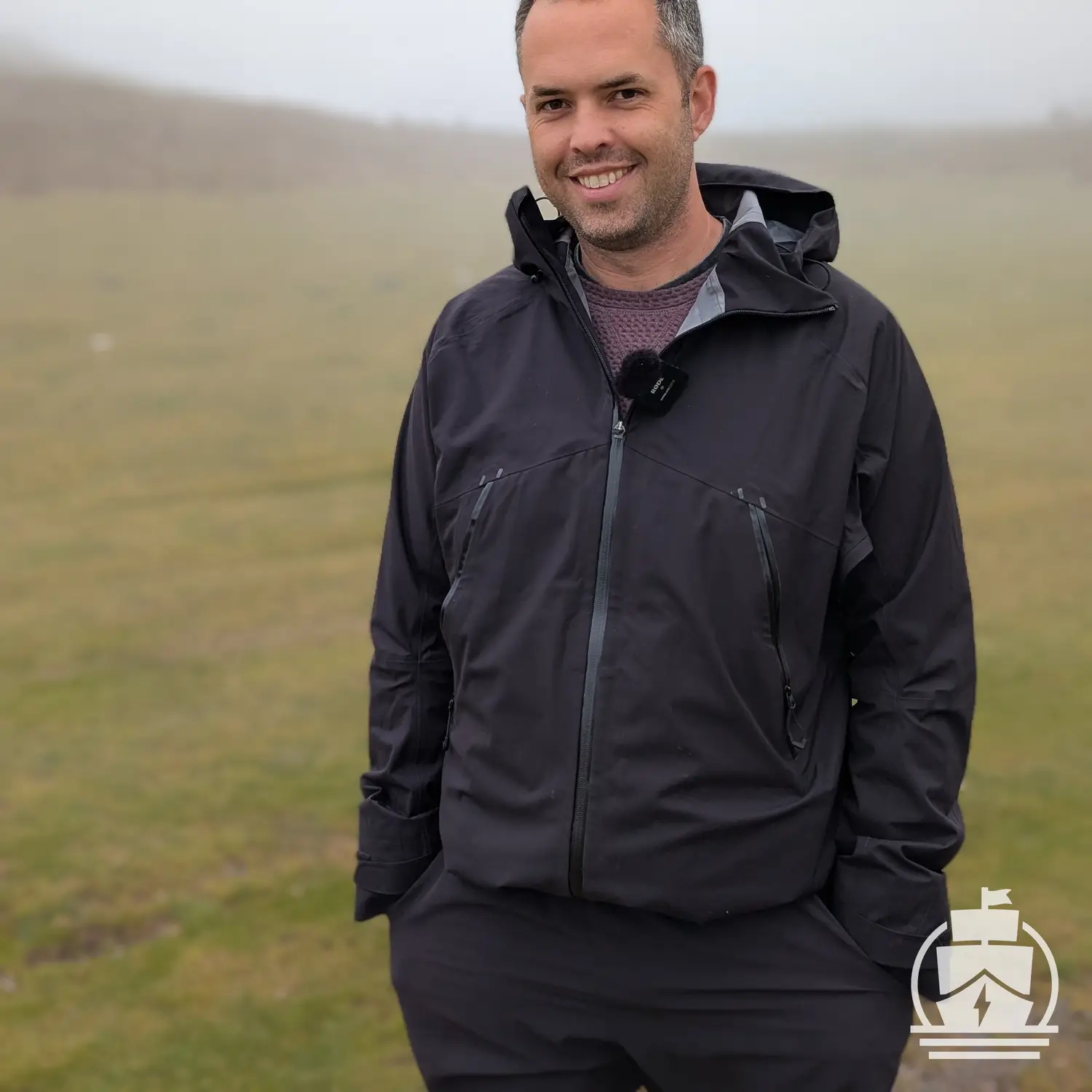
"I want to optimize for hackability and customization."
Justin Moon & Gigi take a walk in Madeira. Recorded during SEC-07.
Listen on sovereignengineering.io
In this dialogue:
Justin's new obsession: building Shadow, a hackable mobile operating system for people who want full control over the stack
Why Android is interesting again: not because it's clean, but because it is at least open enough to fight with
Android file chaos, and the immortal "file saved successfully" meme
One wallet, one relay connection, one shared set of primitives at the OS level, instead of every app reinventing the same mess
The "UNIX tools of Nostr" idea, revisited from #07: Zig Multiplatform w/ Justin
Booting a phone with less Android, then turning Android off piece by piece once the system is running
Early signs of life for Shadow: Kosti successfully compiled and ran it
From 13-second button clicks to instant GPU rendering, and why that counts as real progress
Ricing phones like Linux desktops, with the usual Typecraft explainer and awesome-ricing rabbit hole
Why Justin chose TypeScript apps on top of a Rust core: make the parts you should not vibe-code solid, and let users vibe-code the rest
Apps as source code, almost like DMs, instead of a permissioned app store pipeline
How maps, notebooks, and everything else dematerialized into the computer, via this video of stuff disappearing into software
The app store tax, DUNS numbers, LLC theater, and why Justin would rather build a parallel thing than beg Apple and Google for approval
Permissionless alternatives at every layer: phone OS, payments, relays, networking, app distribution, and compute
GrapheneOS as the security-maximalist trade-off, versus Shadow as the hackability-maximalist trade-off
"I want a 3D printed gun of phones" as Justin's deliberately unhinged way of describing maximum user freedom and minimum guardrails
"I want to optimize for shooting yourself in the foot" as the sharper version of the same trade-off: less safety theater, more user agency
Why many Linux phones failed: server people building for phone users, without a real vision for what a phone should become
The Nostr opportunity: a community weird enough to flash devices, test strange tools, and actually use them
"Where do your ideas come from?" and the obligatory Norm clip
Why the future may look like one agent per project, each with its own identity, memory, and full machine to operate
Personal clouds, bare-metal boxes, ephemeral VMs, and feeding your agents compute instead of feeding SaaS subscriptions
Why local-first and self-hosted agent setups matter if you want real sovereignty, durable memory, and no surprise bans
FIPS as a path toward permissionless networking, cryptographic addressing, and small resilient parallel internets
Nostr VPN, tailscale-like overlays, and why overlay networks beat waiting for the whole world to rewire itself
Messaging trade-offs: Marmot, SimpleX Chat, MLS coordination pain, chat relays, double ratchets, and what actually works for small groups
Pika, identity, signaling, and why Justin wants to stop theory-crafting and start shipping
Sovereign Engineering as a high-bandwidth filter for crazy ideas, where most things die, a few things bloom, and that is the point
Why Bitcoin, Nostr, and projects like FIPS feel Amish-compatible: the goal is not rejecting technology, it is rejecting dependence
Justin's closing promise: less talking, more shipping, and yes, shipping violently
Related dialogues:
#01: Start Ugly w/ Pablo
#14: Building Browsers w/ Justin
#18: Rewriting TENEX w/ Pablo
#26: Zapstore w/ Franzap
#30: Napplets w/ Sandwich
#32: Nostrology w/ WhisperHash
People mentioned:
Steve Lee (early sounding board for Lightning-at-the-OS-level ideas)
Johnathan Corgan (creator of FIPS, pulled out of retirement by the right kind of weird)
Martti Malmi (Nostr VPN, offline-friendly networking, also on #21: Hashtree, Nostr VPN, and Iris)
UTXO the webmaster (building Wisp, see also Citadel Dispatch #200 with UTXO)
Kosti (successfully compiled and ran Shadow OS)
Pablo (app-as-chat-box idea, Pika, general agentic mischief)
Arjen (mesh instincts, noDNS lineage, helping make the weird legible, also on #17: Organic Tech)
Dimi (running VPS and simple cloud infrastructure alongside bitcoin mining facilities)
Cobrador (TollGate, rural and off-grid deployment instincts)
Shadrach (parallel systems, Amish country, and practical off-grid thinking, also on #20: Archipelago Meshtadels)
Bitstein (orange-pilling the Amish remains a live meme)
Erik Cason (mind-blowing people without realizing it)
Projects & tech mentioned:
Shadow (Justin's experimental mobile OS)
GrapheneOS (security-focused Android fork)
FIPS (Free Internetworking Peering System)
Nostr VPN (overlay networking over Nostr)
Pika (encrypted messaging experiments for OpenClaw)
Marmot (MLS-based chat on Nostr)
SimpleX Chat (private messaging reference point mentioned in the conversation, see also Citadel Dispatch #196 with Evgeny Poberezkin)
OpenClaw (one agent per project, memory, and task execution)
ZapStore (permission-minimized Android app distribution)
Wisp (mobile Nostr client being built by UTXO, see also Citadel Dispatch #200 with UTXO)
Pokey (Nostr notification aggregation for power users)
Deno (runtime for TypeScript apps on the phone)
Nix (reproducible builds, environments, and OS packaging)
Magisk (rooting and system modification on Android)
BitChat (UX-first mesh messaging reference point)
TollGate (connectivity and payments at the edge)
HRF (trainings, activists, and the account-creation pain of the permissioned web)
Recorded at 944,875.
See moreTop comments