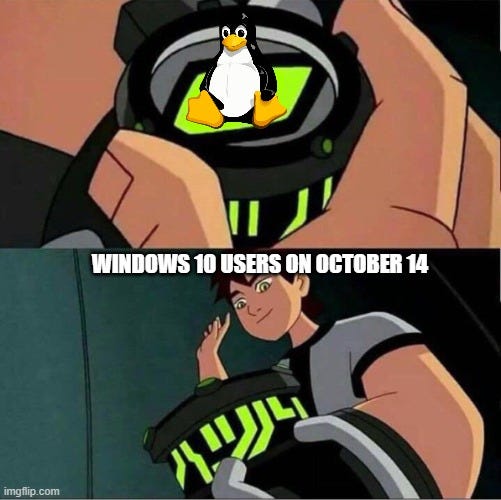
🐧 This week on the podcast, I walked through a personal tech crossroads: realizing that Windows is no longer my “everyday OS.”I hit a breaking point after too many failed recordings, BitLocker bricking my system out of nowhere, and Microsoft’s constant push toward “Windows-as-a-service.” It made me rethink how I actually use computers — and whether Windows even deserves to be my daily driver.💻 The Everyday Computer ProblemBack in the mid-2000s, running Linux was an experiment in frustration. Distros like Ubuntu and Mint were cool, but drivers, media, and compatibility were constant headaches. Fast-forward to 2025, and the story has flipped.* Daily tasks? Browsing, email, docs, spreadsheets, notes — Linux handles them effortlessly.* Creative work? Linux has strong tools (Krita, GIMP, Kdenlive), but Adobe, FL Studio, and top-tier video editing still lock you to Windows.* Gaming? Steam runs better than ever on Linux, but some titles (like Fortnite) are still tied to Windows.That makes Windows less of a “default OS” and more like a studio tool — something you fire up for specialized work, not daily living.🖥️ The New Tier SystemHere’s the reframing that hit me:* Phone = my “pocket computer” for GPS, calls, and cameras.* Linux laptop / Pi terminal = the real everyday computer. Lightweight, private, customizable.* Windows PC = a “specialty machine,” just like a console. Needed for certain games, video editing, or music production — but not for everything else.Once you accept that, the stress of “making Linux replace Windows” goes away. Instead, Linux gets to shine in the space where it’s already better.🐧 Where to StartIf you’re thinking of jumping, don’t overcomplicate it. A few distros that just work in 2025:* Ubuntu GNOME → Best touchscreen & modern hardware support.* Ubuntu MATE → Mint-like, lightweight, family-friendly.* Xubuntu → Very light, runs great on older laptops.* Debian 12 → Rock-solid, works across both x86 and ARM (hello Raspberry Pi).I’m leaning toward Debian for my own build — it’s boring in the best way.✝️ Closing ThoughtWindows is becoming a specialty tool. Linux is becoming the everyday computer. That’s the future I see, and it feels good to finally accept it.Stay holy,— Shae🕒 Timestamps00:00 – 01:25 | Technical issues & feeling sickFailed attempt at recording an instructional video.Audio problems in OBS made the video unusable.Allergies and a virus left the host drained, prompting a switch to phone recording.01:30 – 02:53 | Installing Linux againStarts a new Linux install.Compares Linux motivations in 2025 vs. 2005.Early Ubuntu history and spin-offs (Xubuntu, Kubuntu).03:00 – 04:31 | Windows as a “live service”Windows has shifted to subscription and license-heavy model.Frustration with forced updates, licensing costs, and the push for Office 365.Notes open-source software often works “good enough” for average users.05:00 – 07:20 | Specialty software limits Linux adoptionFor art/design: GIMP, Krita vs Adobe.For music: FL Studio vs open alternatives.For video: DaVinci Resolve partially supports Linux but imperfectly.The “out of the box” expectation vs tinkering.07:30 – 09:04 | Negative Windows experiencesIssues with OneNote overwriting icons.BitLocker bricking system unexpectedly.Windows pushing unwanted services led to “last straw”.09:10 – 10:36 | Gaming headaches on LinuxInstalled Mint for kids → Fortnite not working.Steam runs, but only some games are compatible.Mentions Wine as an upcoming experiment.Specialty drivers and hardware often Windows-only.10:40 – 12:13 | Redefining computer useMost daily tasks (email, browsing, docs, spreadsheets, light drawing) work fine on Linux.Suggests keeping Windows only for specialty “studio” use: DaVinci, FL Studio, or certain games.Everything else = Linux.12:18 – 15:05 | Raspberry Pi & ARM realizationsPi uses ARM, not x86 → Windows not viable.Linux more universal across platforms.Phones already cover much of daily computing; PCs are for “specialty work.”Shifts view of Windows PCs into the same category as consoles: specific-use devices.15:10 – 16:16 | Closing thoughts & distro picksRecommends Ubuntu, Xubuntu, Debian, or Ubuntu MATE.Personally leaning toward Debian for x86 + ARM compatibility.Ends with optimism about Linux’s future and a sign-off: “Stay holy”. This is a public episode. If you'd like to discuss this with other subscribers or get access to bonus episodes, visit xeroforhire.substack.com/subscribe
Top comments